7 countries with the world’s largest submarine fleets in 2026
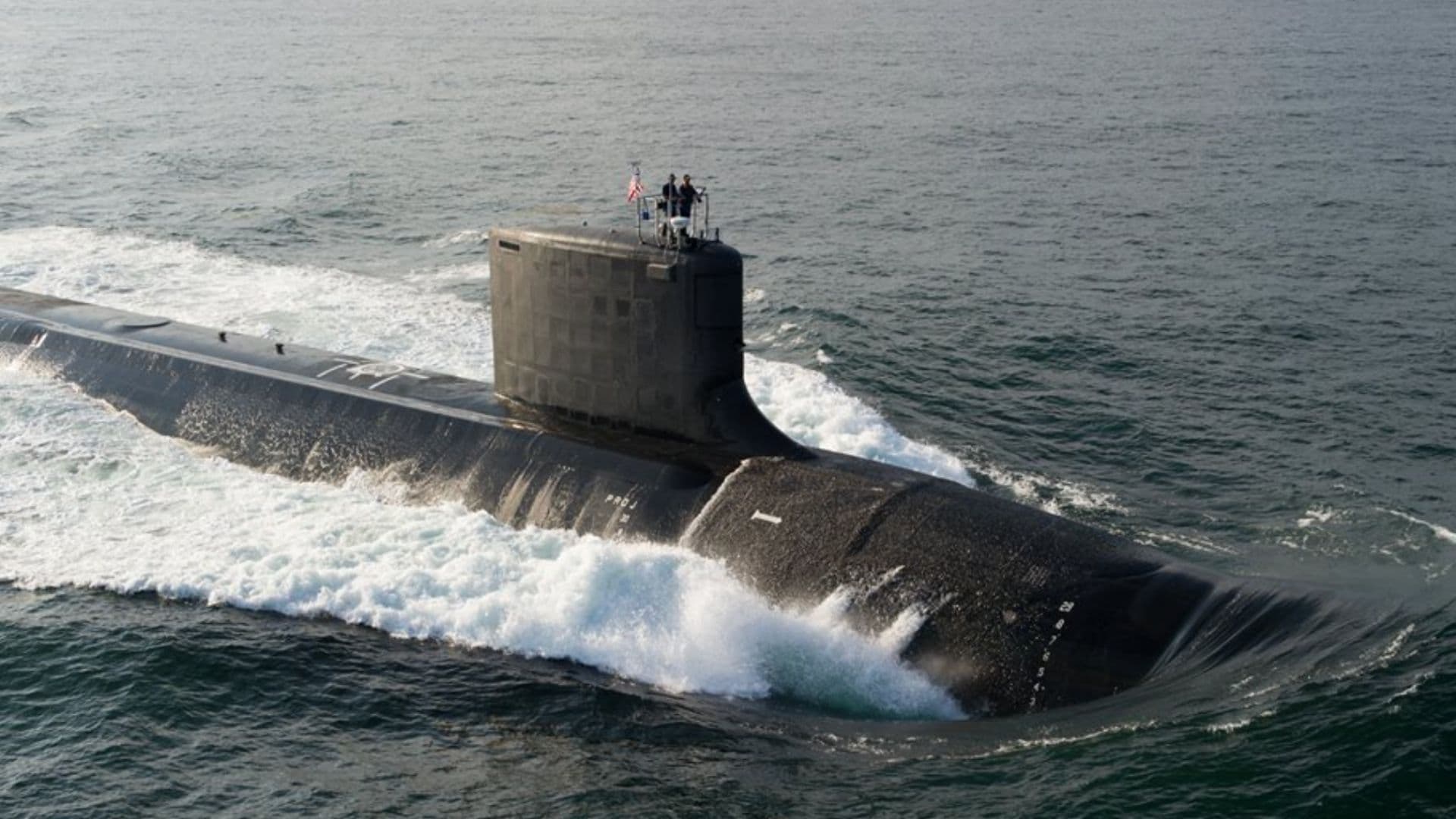
Global submarine fleet construction is accelerating, with China launching 24 vessels in five years to challenge the dominance of the US and Russia. While the US maintains a fully nuclear-powered fleet, other nations are rapidly expanding their naval capabilities.
Submarine construction is running at a pace not seen since the Cold War. China alone has launched 24 boats in five years, more than the US and Russia combined over the same stretch, and new nuclear-submarine programs are now underway from Brazil to North Korea. Only a handful of nations currently build nuclear-powered boats at all, the US, Russia, China, the UK, and France, with India closing the gap after commissioning its third ballistic missile submarine, INS Aridhaman.Against that backdrop, here’s how the world’s largest navies stack up by raw fleet size, ranked by total submarine count rather than propulsion type, age, or combat capability.1. United States (66)The US is tied for the top spot with 66 submarines, per Global Firepower’s 2026 assessment.Every boat in the US submarine force runs on nuclear propulsion, spanning Virginia-class attack boats, Ohio-class ballistic missile submarines, and guided-missile variants, with the Virginia-class Block V widely regarded as the benchmark for modern attack submarines.That uniformity gives the US Navy one of the most consistently modern submarine forces in the world, even as its production tempo lags behind China’s.2. Russia (66)Russia matches the US submarine-for-submarine, also fielding 66 boats. Its fleet mixes Borei-class SSBNs carrying Bulava missiles and Yasen-class guided-missile submarines with older Soviet-era hulls still in commission.This gives it more numerical bulk but a less uniformly modern force than its American counterpart. Moscow continues to modernize this fleet even as its overall naval budget faces broader strain.3. China (61)China’s rise has been the fastest of any fleet on this list, launching 24 submarines in the past five years alone and overtaking Russia as the world’s second-largest operator of nuclear-powered submarines. Its submarine force now includes the Type 093 and 093A Shang-class attack boats. The newer Type 093B guided-missile variant with vertical launch cells, and the Jin-class SSBNs carrying JL-3 missiles. Estimates of China’s shipbuilding capacity vary, but most analysts agree its submarine production tempo is now the fastest of any nation on this list.4. Iran (25)Iran’s fleet is built almost entirely around Kilo-class diesel-electric boats, locally designated Tareq-class, along with a large number of domestically built midget submarines like the Ghadir-class. These are designed for coastal defense and unconventional operations in the Persian Gulf and Strait of Hormuz rather than blue-water deployment, favoring stealth in shallow, contested waters over range or firepower. Tehran has leaned on this asymmetric approach for decades, betting that a swarm of small, hard-to-detect boats can offset its lack of larger, more advanced submarines.5. North Korea (24)North Korea’s fleet is large in number but old and small in size, consisting mostly of Romeo- and Sang-O-class coastal and midget submarines built for infiltration and short-range strikes. Its strategy leans on unpredictability and stealth in contested waters rather than technological sophistication, though a nuclear-powered program is reportedly in development with outside assistance, a shift that would mark a major change in the fleet’s character.6. Japan (23)Japan operates some of the most advanced conventionally powered submarines anywhere. Its newest Taigei-class boats, including the recently delivered fifth hull, JS Chōgei, use lithium-ion batteries instead of traditional lead-acid cells.It extends submerged endurance, and is built for quiet, long-duration patrols across the Indo-Pacific. Tokyo plans to field ten Taigei-class boats in total, part of a broader buildup as Japan responds to expanding naval activity from China and North Korea in the region.7. South Korea (22)South Korea’s fleet centers on domestically built diesel-electric submarines optimized for regional deterrence. This includes the Son Won-il and Dosan Ahn Changho classes, with continued investment in expanding both fleet size and underwater endurance as tensions in Northeast Asia persist.Seoul has also signaled ambitions toward nuclear-powered propulsion as its shipbuilding industry matures.ConclusionTogether, these seven fleets account for roughly a quarter of the world’s naval submarine force. Yet the numbers alone understate how differently each country arms itself, from an entirely nuclear-powered American fleet to North Korea’s aging midget submarines. China’s shipyards are accelerating faster than any other nation’s, while India, South Korea, and North Korea are all pushing toward nuclear propulsion of their own. As those programs mature over the next decade, both the size and the composition of this list are likely to shift, and the gap between the biggest fleets and the most capable ones could narrow considerably.
Get the full story
Sign up for Headlinne to unlock AI insights, political bias analysis, and your personalized news feed.
Create free accountAlready have an account? Sign in