Sci.News·4 min read·hard
Astronomers Detect Gamma-Ray Burst’s Magnetic Fingerprint
N
News Staff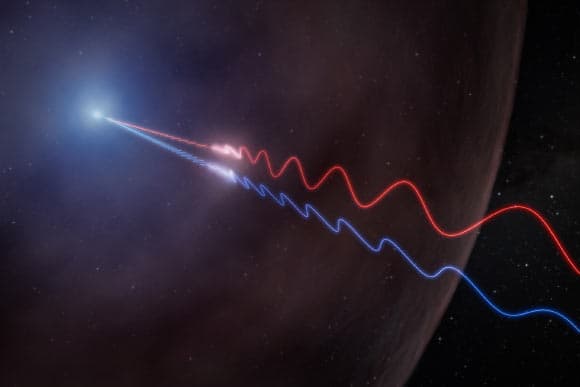
✦AI Summary
Astronomers have used the Very Large Array to detect polarized light and Faraday rotation from a gamma-ray burst afterglow for the first time. This discovery allows scientists to map the magnetic fields surrounding these powerful cosmic explosions.
Using NSF’s Very Large Array (VLA), astronomers made the first radio detection of polarized light and Faraday rotation from a gamma-ray burst afterglow, offering an unprecedented glimpse of the magnetic fields surrounding one of the Universe’s most powerful explosions.
sciencetechnology
✦
Get the full story
Sign up for Headlinne to unlock AI insights, political bias analysis, and your personalized news feed.
Create free accountAlready have an account? Sign in