High hopes for ten turtles released into the wild in Latvia
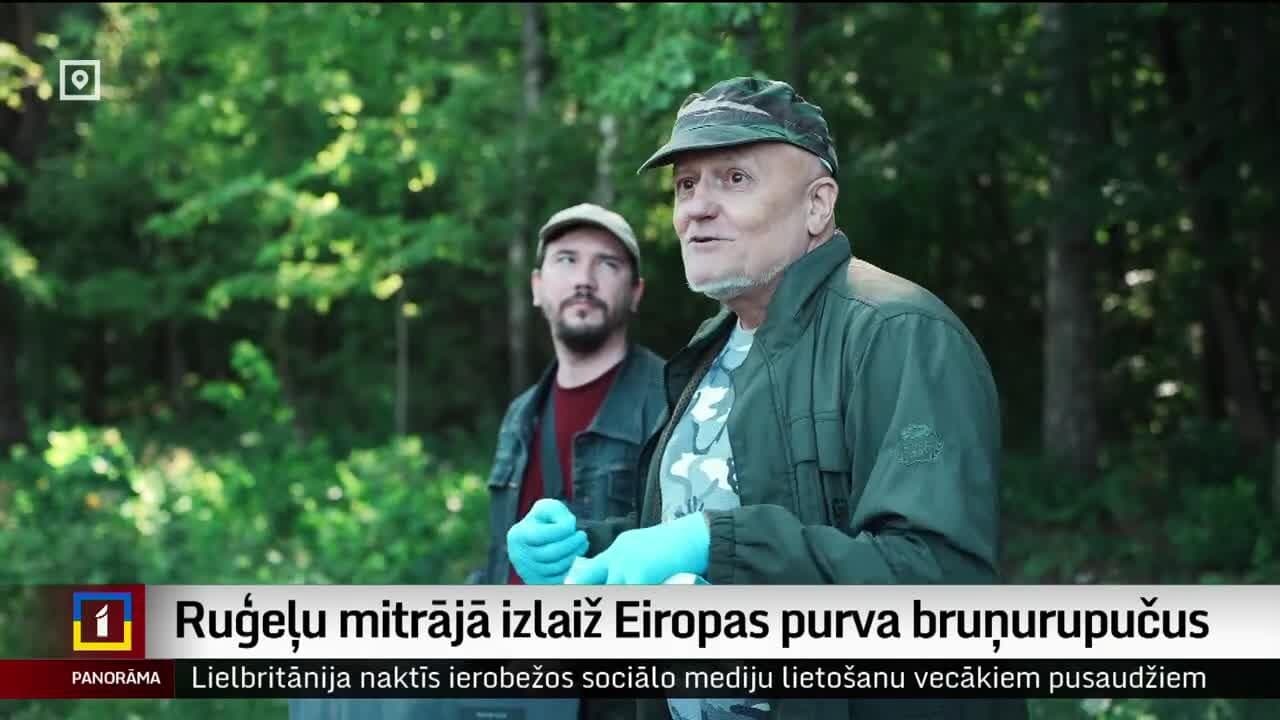
Latvian conservationists have released ten captive-bred turtles into the Ruģeļi wetland to restore local populations. The project involved years of habitat preparation and cross-border cooperation with Lithuania to ensure the survival of the species.
Over the course of five years, the turtles have been carefully raised until they gained enough strength to be able to coexist with the often ferocious wildlife. The turtles spent their first years of life in a specially constructed outdoor pool near Daugavpils. They have now been moved to the Ruģeļi wetland. "We are restoring old populations, which have decreased due to human influence. They generally disappeared. Now we are restoring a historical animal in its historical habitat," said the head of the Latgale Zoo, Doctor of Biology Mihails Pupiņš. A newly hatched baby tutle is only a few centimetres long and often falls prey to predators, so they are raised in zoos until they are five years old and strong enough to be released into the wild. Then the chances of survival are significantly higher. "There are terrible risks: many predators, invasive species, birds, all threaten him, but the bigger he is, the more likely he will be to survive," Pupiņš continued. He mentioned birds of prey, otters, and raccoon dogs as some of the chief predators. But before the turtles could go into the wild, the environment itself had to be prepared. "There was a very long preparation phase for this, because here, in the Ruģeļi wetland, nature had become so wild that it was no longer suitable for local species to multiply their population. Consequently, various infrastructure measures were taken, such as cleaning the banks, collecting mud, and simulating natural disturbances," explained Jolanta Ūzuliņa, Head of International Projects at the Development Department of the Daugavpils City Municipality. Joint Latvian-Lithuanian project The habitat restoration is part of a cross-border Latvian-Lithuanian project implemented by Daugavpils together with Zarasai Municipality south of the border. The project aims to restore wetlands, limit invasive species, and strengthen populations of rare native species, including bog turtles. The total funding for the cross-border project exceeds 700,000 euros, of which 85% is covered by the European Union. In Daugavpils, more than 300,000 euros have been invested in the project activities. "Most likely, we can estimate that there are around 100–150 turtles living in Latvia in total. These are very small populations, a few individuals, and most of them are unable to reproduce themselves because there are few babies. There are very few young turtles," Pupiņš pointed out. It was in Daugavpils that the story of the restoration of European pond turtles began 40 years ago when a female was found that laid 12 eggs in 1985. "In fact, that was the beginning of what started it all. And then we collected them, the last single individuals, all over Latvia, when we couldn't find a population," Pupiņš recalled. Silene in the Augšdaugava region was the first place in Latvia where the restored population of turtles was previously released into the wild. The biologist emphasized that these reptiles have no problem moving around in a wide area. "Our goal is not to restore it in a specific lake. It is very important that the others multiply, that they spread around. That is why we are looking not only at the specific lake, but also at the vectors where it can go. Which stream, which wetland they can go through to spread further. This is a very important moment," emphasized Mihails Pupiņš. "The Ruģeļi wetland is actually quite large, and many people didn't even know about it until the start of this project. And we also want to keep it a bit of a secret so that people don't take it over and come to swim, so that it remains for the turtles, because there is a large territory here - more than 130 hectares," emphasized Jolanta Ūzuliņa. Six female and four male turtles have gone on their wild adventures, but researchers will continue to monitor them undisturbed – each of them has its own microchip, which will allow for periodic monitoring of their development. Biologist Pupiņš also specifically drew the attention of anglers to this, urging them not to use earthworms for bait, and also not to use traps without a float, and to leave the turtles alone.
Get the full story
Sign up for Headlinne to unlock AI insights, political bias analysis, and your personalized news feed.
Create free accountAlready have an account? Sign in