NASA captured the Black Sea turning brilliant turquoise from space
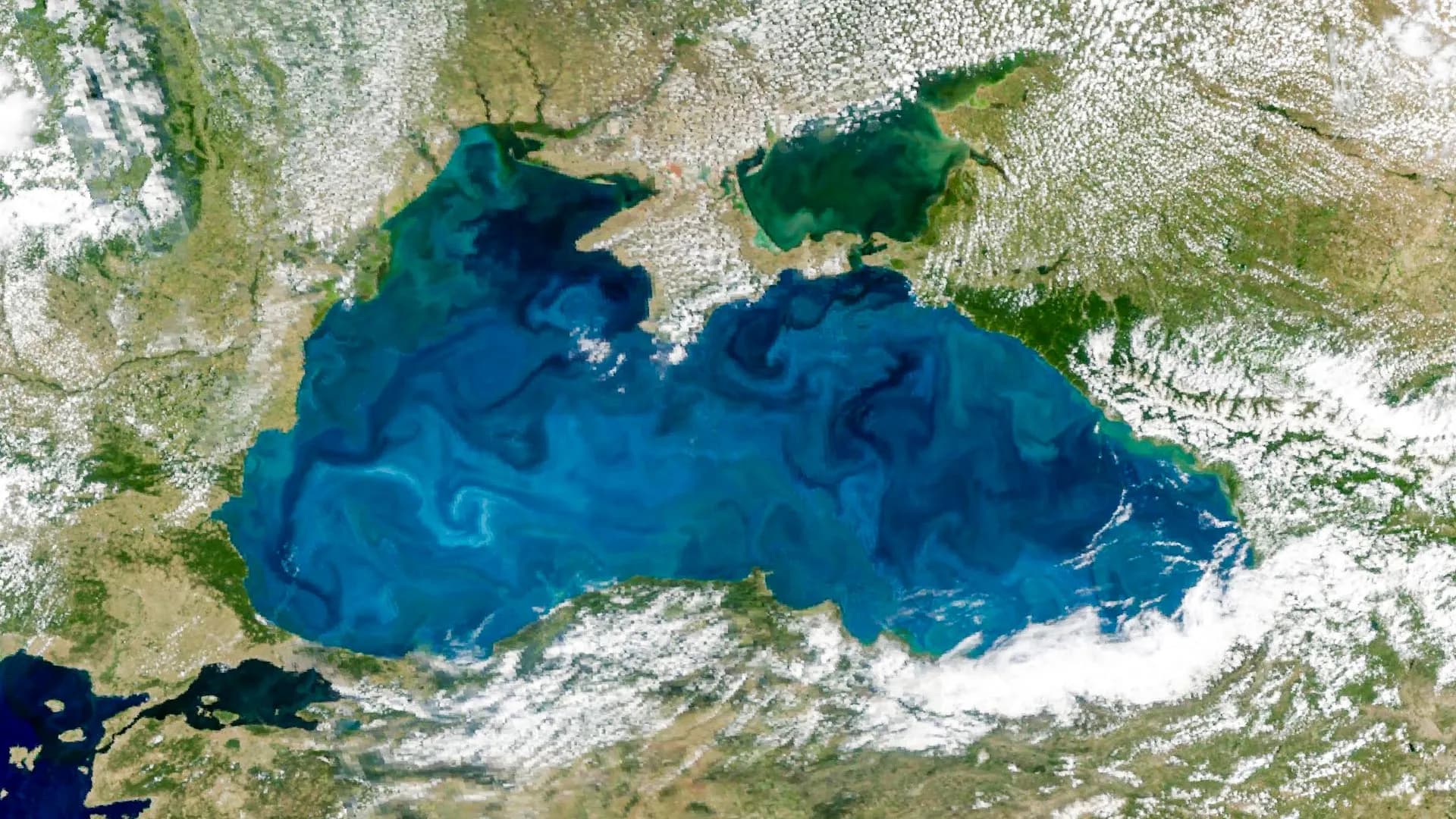
NASA's PACE satellite captured the Black Sea turning vivid turquoise due to massive blooms of coccolithophores, microscopic phytoplankton with calcium carbonate shells. This seasonal phenomenon, visible from space, occurs in late spring and early summer, contrasting with the darker appearance caused by diatoms at other times.
The Black Sea, which lies between Europe and Asia and connects to the Mediterranean through a series of waterways, is known for its dark waters. But every spring and summer, it undergoes a remarkable transformation, with large areas turning a vivid turquoise. On June 22, 2026, NASA's PACE (Plankton, Aerosol, Cloud, ocean Ecosystem) satellite captured this colorful seasonal display using its OCI (Ocean Color Instrument).
Get the full story
Sign up for Headlinne to unlock AI insights, political bias analysis, and your personalized news feed.
Create free accountAlready have an account? Sign in