Researchers in Latvia concerned about potential threat to academic freedom
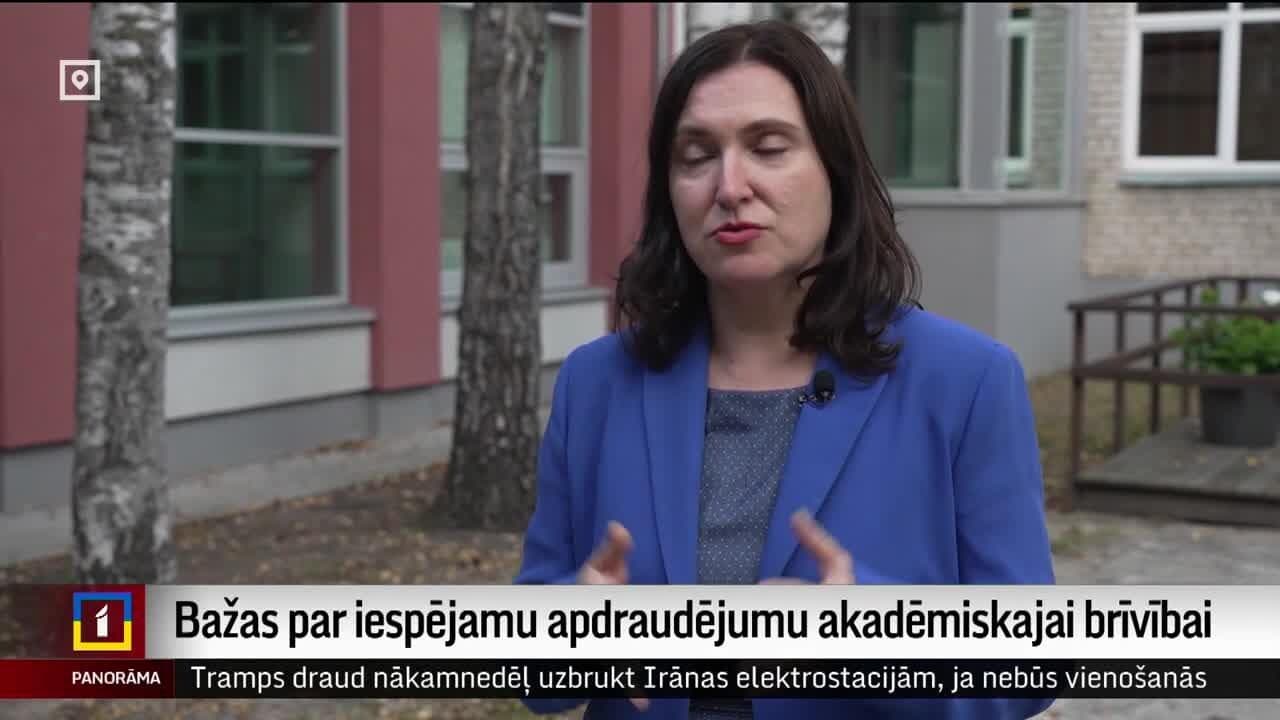
Latvian researchers are expressing concern over political interference in academic funding after the Saeima's Public Expenditure and Audit Committee began questioning specific research projects. The committee is demanding justification for the utility and economic impact of these studies.
The Saeima's Public Expenditure and Audit Committee is scheduled to discuss funding for research projects granted by the Latvian Science Council at its July 22nd meeting. The committee is scheduled to examine three of the more than 50 projects at the meeting. Riga Stradiņš University (RSU) leading researcher Ieva Puzo is leading one of the projects that has been funded by the Latvian Science Council. 56 research projects have been approved in the 2025 Fundamental and Applied Research Project Competition. Each of them had to compete in fierce competition to win the competition. In addition, the scientific contribution of each project has been assessed by high-ranking internationally renowned scientists. This was also approved by the Latvian Science Council. "This is the only opportunity in Latvia for scientists to apply for projects on topics that are not, for example, defined by the state or some other organization, but that they themselves see as valuable at this particular time, in this place," explained Puzo. The project led by Puzo focuses on life and resilience in Latgale during various contemporary challenges. The project began this year, is planned to last three years, and involves a team of several researchers. Researchers will need to explain and justify their chosen topics This is one of three projects whose title has attracted the attention of Saeima members. The chairman of the commission, Kaspars Melnis (Union of Greens and Farmers/ZZS), believes that in the current economic situation, we must be convinced that the study, which costs 300,000 euros, is useful and necessary. Therefore, the researchers have been invited to the commission to explain it. "The most important thing is to focus on how to keep those people in Latgale, and what it takes for them to return. That's a completely different matter. And that's what's important to discuss with the researcher now. And what is the plan, what they're focusing on, the result." However, Melnis insisted the intention was not about influencing the research, saying such assumptions were "a little hasty about what the commission's outcome will be." The researchers indicated that, given their public funding, they are ready to talk about and explain the project, including to members of parliament. "At the same time, what is worrying right now is, of course, mainly two things - the time at which this meeting is being organized. And the second, of course, is the principles according to which the specific projects were selected, on which the Latvian Science Council and also the project management leaders are invited to provide their perspectives, their vision," said Puzo. In addition to the aforementioned project, researchers who wish to conduct anthropological research on raising children in same-sex partnerships, as well as on anti-genderist discourse in Latvian public space and literature, have also been invited to the Saeima – topics that clearly have a political as well as scientific dimension. It cannot be ruled out that MPs will also consider the possibility of reviewing the funding already allocated. "We will also, if possible, examine possible versions of what it is if we see that funding is being used inefficiently. How can we cut that funding to use it more effectively," said Melnis. Possible legal proceedings Since receiving the invitation, several researchers have expressed concerns about whether the researchers' invitation to the Saeima is a signal of a desire to influence academic freedom. Academician Sanita Osipova also pointed this out: "The signal is absolutely unfavorable. But sometimes I have the feeling that politicians in the country have no real understanding of what academic freedom is, why it is needed and why the European Court of Human Rights has recognized in its judgments that academic freedom has much higher limits on what a scientist can say and admit than, for example, freedom of speech. Because with the help of academic freedom, the sustainability and development of the state, the sustainability and development of society are ensured. That is why when uncomfortable questions are discussed, questions are explored to which everyone seems to already know the answers, but it turns out that it can be looked at differently, solved differently." Osipova pointed out that if funding for a project were to be withdrawn or reduced, this would be grounds for appealing to the Administrative Court, and the losses to the state could be even greater than the potential savings that were intended. If the controversy surrounding scientific research does unfold as feared by academics, it risks causing wider embarrassment, too. As previously reported by LSM, Latvia intends to push a message that it is a hotbed of scientific research and innovation during its upcoming Presidency of the Council of the European Union. "The involvement of universities will help us draw on the potential of our academic community in preparing for and delivering the Latvian Presidency,” said the Minister of Foreign Affairs, Baiba Braže, at an earlier event to get the message across.
Get the full story
Sign up for Headlinne to unlock AI insights, political bias analysis, and your personalized news feed.
Create free accountAlready have an account? Sign in