Space Daily·2 min read·medium
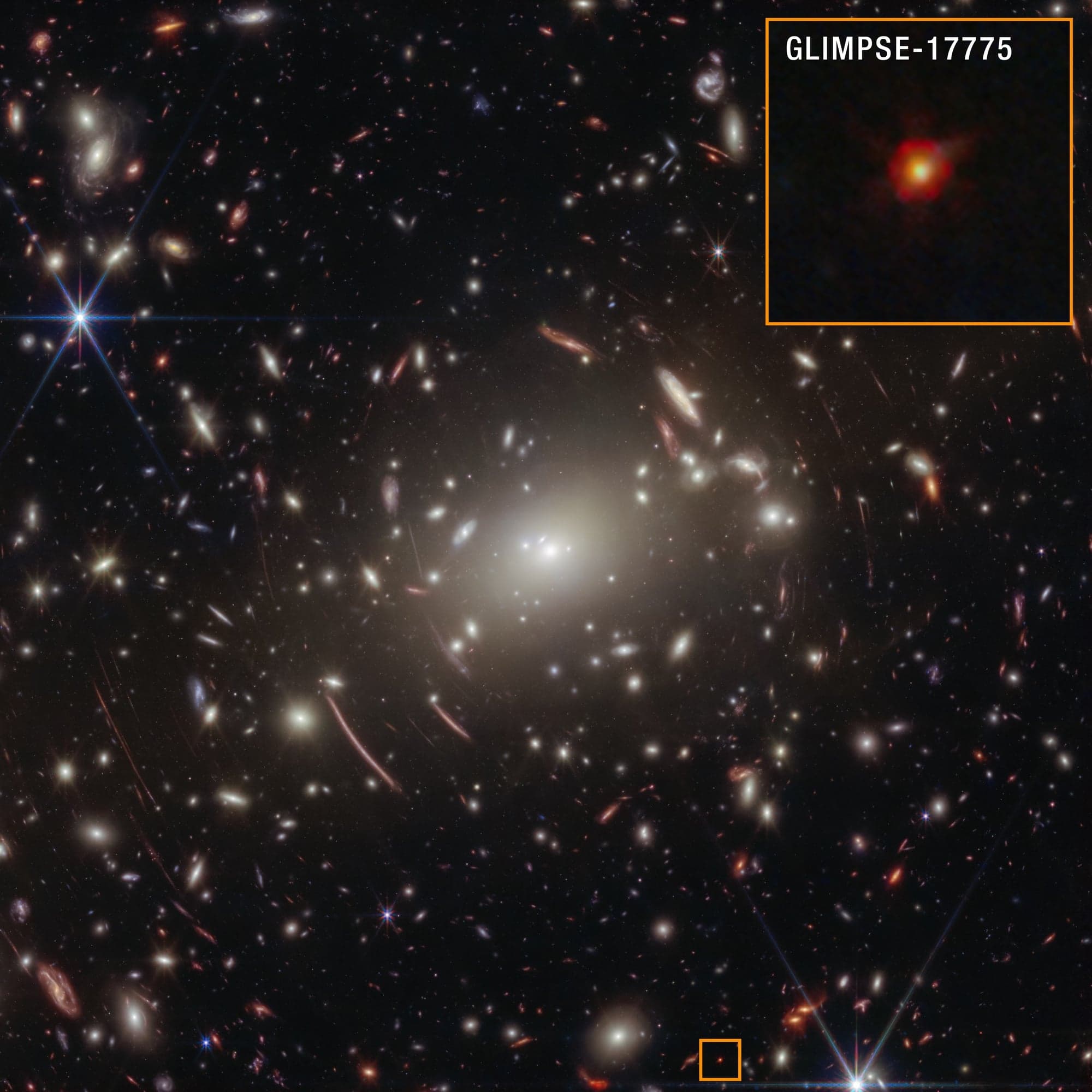
The James Webb Space Telescope found tiny “little red dots” that looked like impossibly compact galaxies — but astronomers now suspect many may be “black hole stars,” young black holes wrapped in gas
✦AI Summary
Astronomers using the James Webb Space Telescope have identified compact red objects in the early universe that were initially thought to be galaxies. New research suggests these may actually be 'black hole stars,' which are young black holes surrounded by dense gas.
The first deep images from the James Webb Space Telescope contained a population that astronomers had not expected to see. Scattered among distant galaxies were compact red points, abundant in the early universe and bright enough to imply extraordina... [7916 chars]
sciencetechnology
✦
Get the full story
Sign up for Headlinne to unlock AI insights, political bias analysis, and your personalized news feed.
Create free accountAlready have an account? Sign in