This alien planet never has sunrise or sunset. It may support life
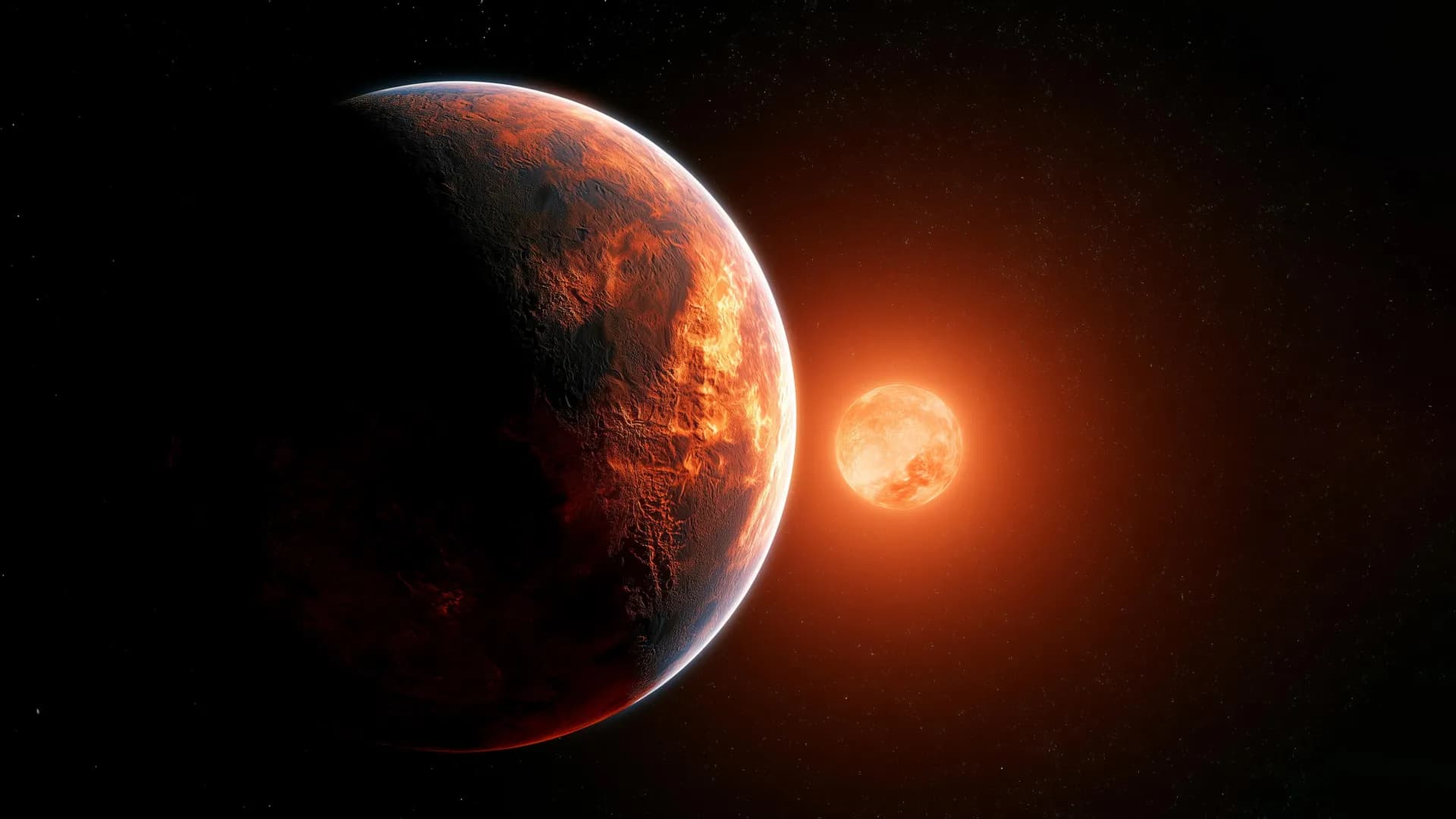
Researchers have found that tidally locked exoplanets, which always show the same face to their star, may be more hospitable to life than previously thought. By distributing heat laterally, these planets can maintain moderate thermal environments despite having permanent day and night sides.
LHS 3844b is an exoplanet just slightly larger than Earth that orbits the red dwarf star LHS 3884, located 48.5 light years from our solar system. Unlike Earth, it is tidally locked, meaning it rotates once on its axis in exactly the same amount of time it takes to orbit its star. As a result, one hemisphere experiences constant, blistering daylight while the other remains in permanent darkness so cold it approaches absolute zero (zero Kelvin).
Get the full story
Sign up for Headlinne to unlock AI insights, political bias analysis, and your personalized news feed.
Create free accountAlready have an account? Sign in